
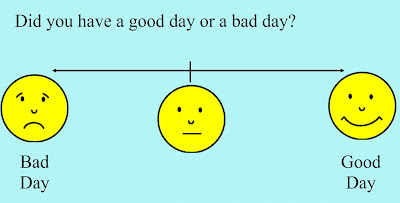
Doctors usually classify patients’ heart failure according to the severity of their symptoms. The table below describes the most commonly used classification system, the New York Heart Association (NYHA) Functional Classification 1 . It places patients in one of four categories based on how much they are limited during physical activity. In the HCM community, this NYHA class system is less than ideal as patients may vary in class in a short period of time and not maintain a fixed NYHA Class, but rather experience what we at the HCMA describe as “Good Day/Bad Day syndrome”. If you are asked in what class you are categorized you will understand it is based on observation.
For Example:
- A patient with minimal or no symptoms but a large pressure gradient across the aortic valve or severe obstruction of the left main coronary artery is classified: Function Capacity I, Objective Assessment D
- A patient with severe anginal syndrome but angiographically normal coronary arteries is classified: Functional Capacity IV, Objective Assessment A
1 Adapted from Dolgin M, Association NYH, Fox AC, Gorlin R, Levin RI, New York Heart Association. Criteria Committee. Nomenclature and criteria for diagnosis of diseases of the heart and great vessels. 9th ed. Boston, MA: Lippincott Williams and Wilkins; March 1, 1994.
Original source: Criteria Committee, New York Heart Association, Inc. Diseases of the Heart and Blood Vessels. Nomenclature and Criteria for diagnosis, 6th edition Boston, Little, Brown and Co. 1964, p 114.
Additional source: https://www.heart.org/en/health-topics/heart-failure/what-is-heart-failure/classes-of-heart-failure
The post NYHA Class Categories appeared first on Hypertrophic Cardiomyopathy Association.